
Last updated: December 2025

Sports marketing done right doesn't just sell products. It becomes part of the culture, reshapes entire markets and drives measurable commercial outcomes that change how the industry operates.
The campaigns below earned validation from the industry's highest authorities: Cannes Lions Grand Prix, D&AD Black Pencils, Emmy Awards. Each generated billions in brand value, sparked global conversations and fundamentally changed how we think about sport, identity and purpose.
This isn't a subjective ranking. Every campaign listed met rigorous selection criteria based on industry recognition, commercial impact and cultural transcendence. The result is the most comprehensively researched analysis of iconic sports marketing campaigns available online.
How These Campaigns Were Selected
To qualify for this list, campaigns had to demonstrate excellence across three pillars:
1. Industry recognition
Won Cannes Lions Grand Prix, D&AD Pencils, Emmy Awards or equivalent top tier creative awards
Received recognition from major industry publications and award bodies
Set new benchmarks that competitors rushed to copy
2. Commercial impact
Generated measurable sales increases, brand value growth or market share gains
Achieved verified reach metrics (views, impressions, engagement)
Drove documented ROI through financial reports or third party analysis
3. Cultural transcendence
Sparked conversations beyond the sports and marketing industries
Entered popular culture and remained relevant years after launch
Changed industry practices or audience expectations permanently
What this list excludes:
Campaigns with impressive creative but no verified commercial impact
Regional campaigns with limited global reach
Athlete endorsements without broader strategic campaign infrastructure
Recent campaigns (2024-2025) still too new to assess long term cultural impact
Primary sources:
Company financial filings and earnings calls
Verified media measurement from Nielsen, Kantar and similar authorities
Industry publications including AdAge, Campaign, The Drum, AdWeek
These campaigns set the standard. THE 2026 SPORTS MARKETING TRENDS show where that standard is heading next.
The Definitive Top 10
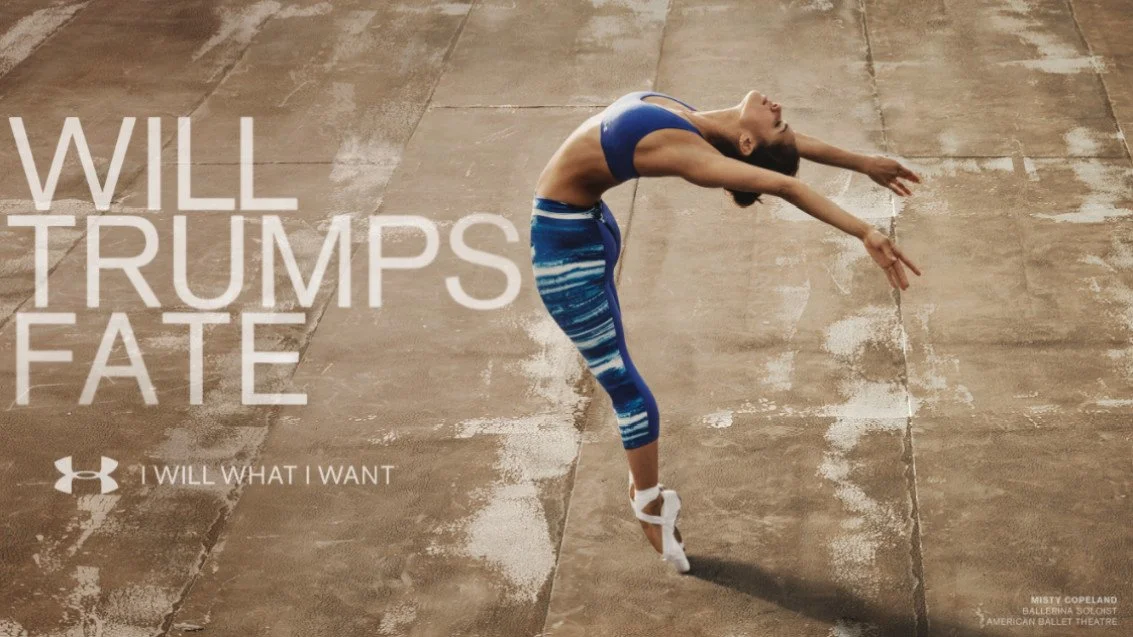
10. Under Armour "I Will What I Want" (2014)
Campaign details:
Brand: Under Armour
Agency: Droga5
Athletes: Misty Copeland (prima ballerina), Gisele Bündchen (supermodel/athlete)
Launch: July 2014
Under Armour had a fundamental problem. Its testosterone fuelled brand image alienated women entirely. The solution was a $15 million campaign, the brand's largest women's investment ever, featuring athletes who faced rejection for not fitting traditional athletic moulds.
Why it worked:
Business impact: Generated 3.5 billion media impressions and $20 million in earned media value. The Misty Copeland video alone earned 9+ million views within weeks of launch. Under Armour's website traffic increased 42% during the campaign period, with women's product sales growing 28% year over year. More importantly, it repositioned the brand for a market segment it had previously failed to reach, opening new revenue streams that contributed to sustained growth.
Marketing strategy: The Misty Copeland execution juxtaposed her powerful, muscular physique against a ballet school rejection letter stating "you have the wrong body for ballet." As she performed complex ballet movements, the letter's cruel words appeared on screen, creating a visceral contrast between institutional gatekeeping and actual excellence. The Gisele Bündchen spot streamed real time social media criticism across the screen as she shadowboxed in a boxing gym, embodying the campaign's core message: "will beats noise."
This was the first major campaign positioning ballet and non traditional athletics as equal to field sports, expanding what audiences considered "athletic" and challenging decades of narrow representation.
Cultural impact: The campaign sparked conversations about body diversity in athletics that extended well beyond marketing circles. It challenged traditional definitions of athletic bodies and proved Under Armour could compete on emotional storytelling, not just performance fabric technology. The phrase "I will what I want" entered the cultural lexicon among female athletes and fitness enthusiasts.
Industry recognition: Won the Cannes Cyber Grand Prix (2015), the category's sole winner that year, plus two Gold and four Silver Lions across multiple categories. The Cannes jury specifically praised the campaign for demonstrating "how a powerful brand narrative is enabled through technology," recognising both the creative execution and the innovative real time social media integration in the Bündchen execution.
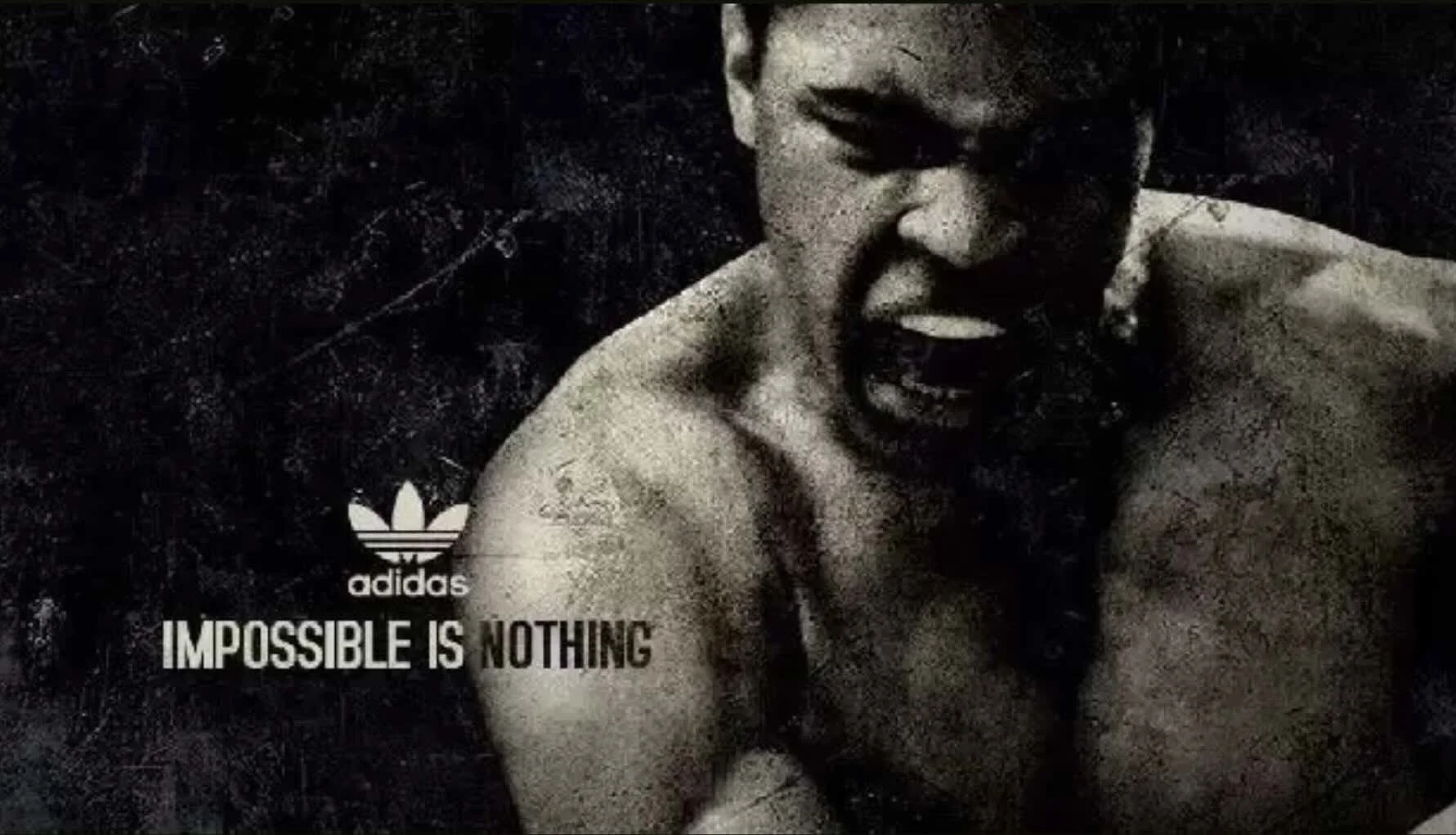
9. Adidas "Impossible is Nothing" (2004-present)
Campaign details:
Brand: Adidas
Agency: 180/TBWA\Chiat\Day
Launch: April 2004
Platform longevity: 20+ years (relaunched 2021, 2024)
At the height of Nike's dominance, Adidas launched a $50 million counterattack built on Muhammad Ali's words: "Impossible is just a big word thrown around by small men who find it easier to live in the world they've been given than to explore the power they have to change it."
Why it worked:
Business impact: Adidas achieved 15% sales growth in the first year following the campaign launch, a significant increase for a brand of its scale. The campaign was recognised by the Advertising Club of New York as one of the top marketing moments in 120 years of advertising. The platform's commercial value is demonstrated by its longevity: Adidas has relaunched the slogan multiple times (2021, 2022 World Cup, 2024), with the 2024 iteration featuring current stars like Jude Bellingham and generating 415,000+ annual Google searches two decades after the original launch.
Marketing strategy: The technical execution was revolutionary for 2004. Using then cutting edge digital manipulation, archival footage showed a young Muhammad Ali appearing to box his daughter Laila Ali, creating an impossible intergenerational matchup. David Beckham, Zinedine Zidane and 22 other athletic icons delivered personal testimonials about overcoming the impossible in their disciplines, making the philosophy feel universal rather than athlete specific or sport constrained.
Cultural impact: The campaign positioned Adidas as a credible challenger to Nike's emotional storytelling dominance at a time when Nike's "Just Do It" seemed untouchable. Athletes across sports adopted "Impossible is Nothing" organically as a personal mantra. The phrase transcended advertising to become shorthand for perseverance against long odds, appearing in graduation speeches, motivational contexts and pop culture references for two decades.
Industry recognition: Established one of advertising's most enduring platforms. While it didn't win Cannes Grand Prix, its longevity (still running 20 years later) and commercial impact validate it as one of the most successful sports marketing investments of the 21st century.
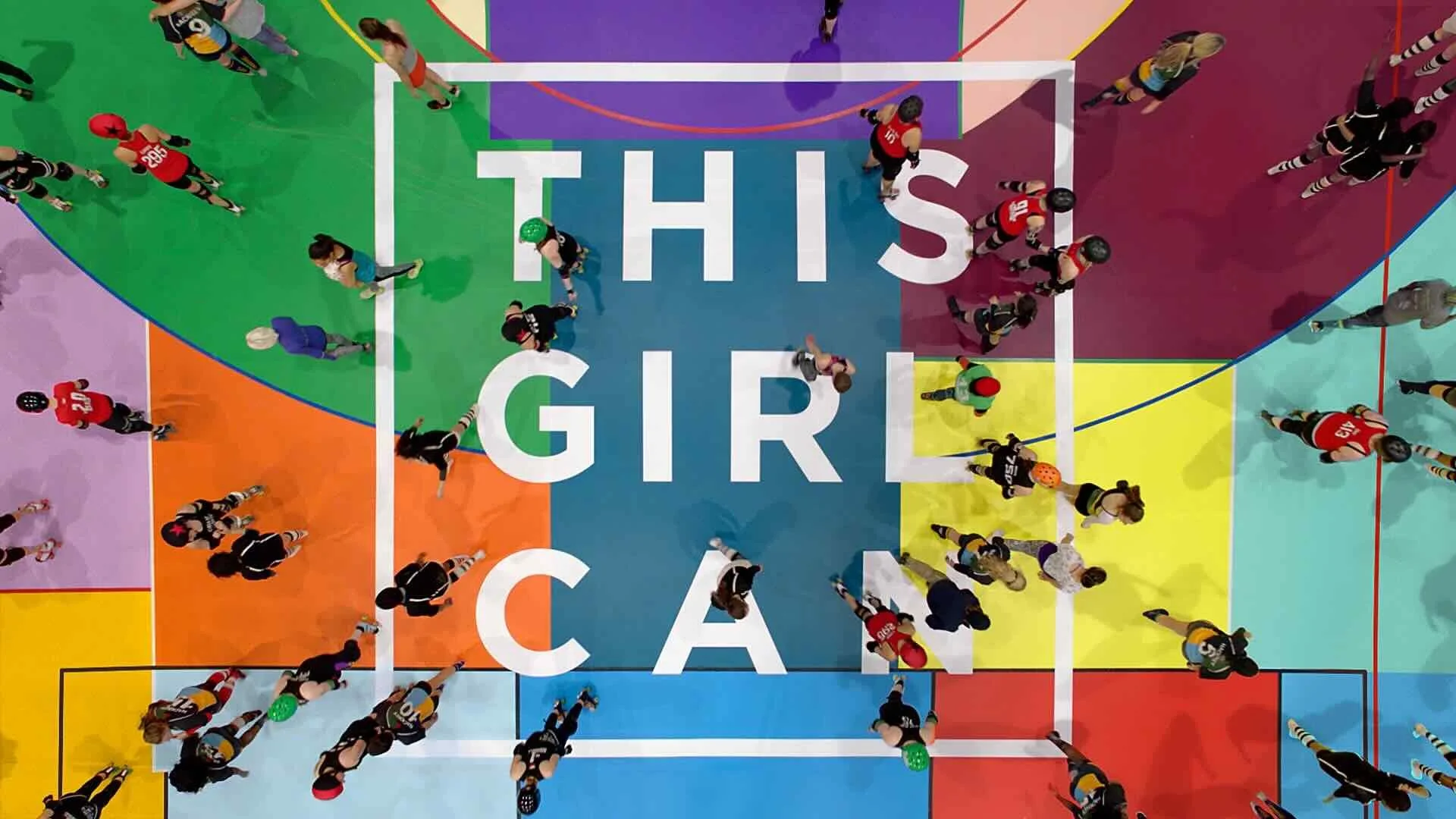
8. Sport England "This Girl Can" (2015-present)
Campaign details:
Brand: Sport England (government funded sports participation body)
Agency: FCB Inferno
Launch: January 2015
Platform longevity: 9+ years ongoing
When research showed two million fewer women than men exercised regularly in the UK, largely due to fear of judgment about their bodies, Sport England responded with advertising that had never been seen before. Real women of different ages, sizes, abilities and ethnicities were shown swimming, running, boxing and dancing with sweat, cellulite and "jiggles" on full display.
Why it worked:
Business impact: Within the first year, 2.8 million women in England were inspired to increase their activity levels. 1.6 million women started exercising for the first time directly attributable to campaign exposure, verified through Sport England's Active Lives survey. The campaign achieved a social return on investment of £3.94 for every £1 spent, measured through healthcare cost savings and productivity gains. The Drum ranked it the 31st best advertisement of all time in 2022, the only government funded campaign in the top 50.
Marketing strategy: The campaign rejected every convention of fitness advertising. Rather than aspirational imagery of toned bodies in perfect lighting, it showed bodies that looked like the target audience's actual bodies in unflattering, sweaty, real workout situations. Set to Missy Elliott's "Get Ur Freak On" (its first ever commercial licence), the message wasn't "get fit to look better," it was "you're already enough, just move." The tagline "Sweating like a pig, feeling like a fox" perfectly captured this empowering inversion.
The strategic insight was addressing the psychological barrier, not the physical one. Research showed women weren't inactive due to lack of time or facilities but due to fear of judgment. By normalising imperfect bodies in athletic contexts, the campaign removed the psychological obstacle.
Cultural impact: #ThisGirlCan trended globally and spawned an online community where women shared workout selfies and encouraged each other, creating a genuine social movement rather than just a campaign hashtag. The format influenced countless subsequent campaigns about body positivity and female representation, establishing a new template for inclusive fitness marketing. Australia, Canada and several other countries developed their own national adaptations, proving the universal appeal of the insight.
Industry recognition: Won five Gold and five Silver Creative Circle Awards (2015), D&AD Pencil, multiple Cannes Lions across Film, PR and Social categories, and the Women's Sport Trust #BeAGameChanger Award. FCB Inferno's chief creative officer described it as "the most successful campaign the agency has ever made."
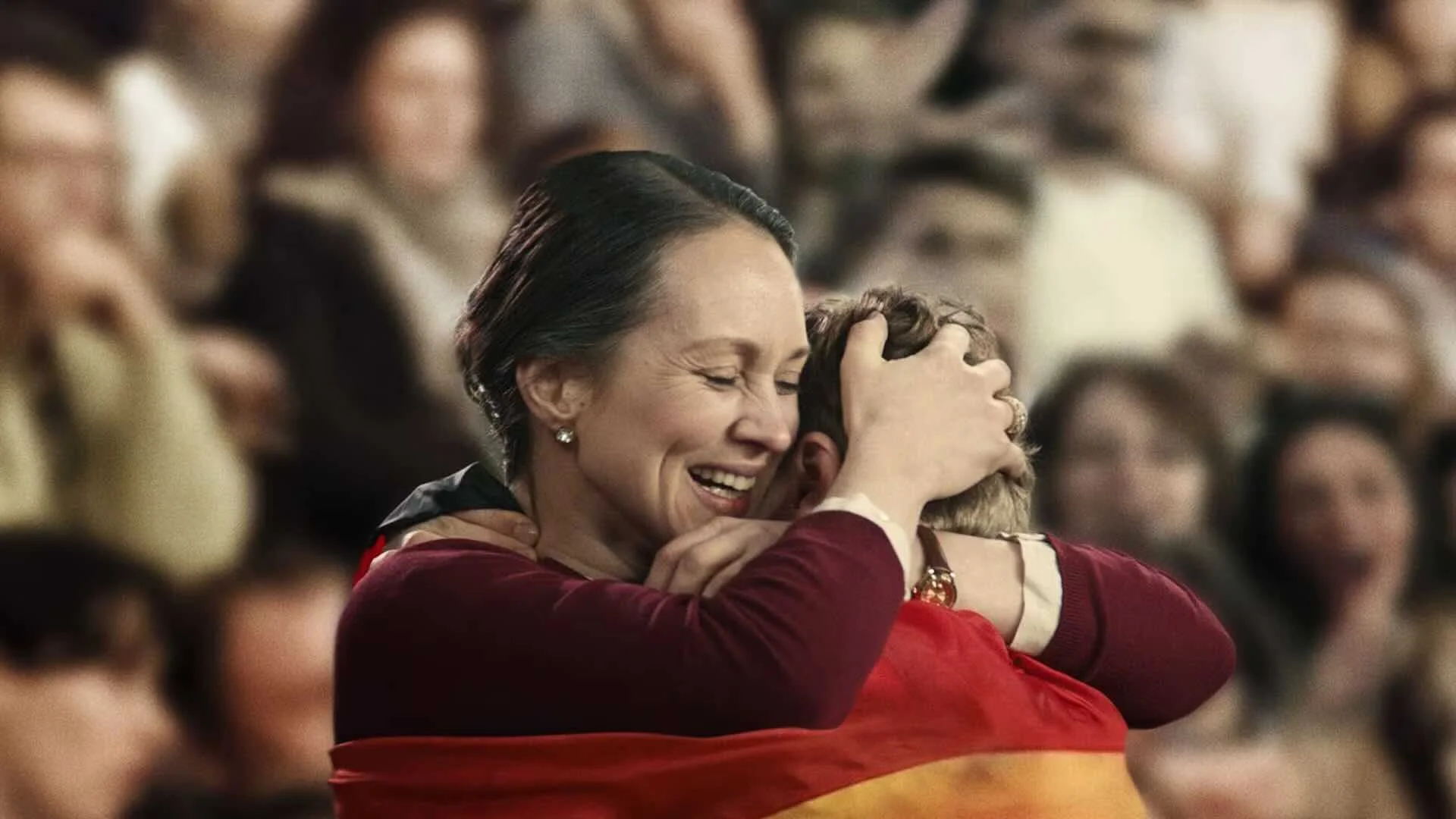
7. P&G "Thank You, Mom" (2010-2021)
Campaign details:
Brand: Procter & Gamble
Agency: Wieden+Kennedy
Olympic cycles: Vancouver 2010, London 2012, Sochi 2014, Rio 2016, PyeongChang 2018, Tokyo 2020 (2021)
Platform longevity: 11 years across six Olympic Games
Rather than sponsoring individual athletes or teams, P&G made a calculated strategic decision to sponsor the people who made Olympians possible: their mothers. The campaign unified 34 separate P&G brands (from Pampers to Tide to Gillette) under a single universal emotional narrative, positioning P&G as "Proud Sponsor of Moms" during the world's biggest sporting event.
Why it worked:
Business impact: The London 2012 execution alone drove $500 million in global incremental sales across P&G's portfolio, making it the most commercially successful Olympic marketing campaign ever measured at that time. The campaign generated 76 billion global media impressions and over 74 million video views across platforms. P&G's global brand health tracker showed the highest ever scores for brand favourability and purchase intent across key markets. Regional results demonstrated universal appeal: eightfold increase in brand awareness in Mexico, 320% surge in online sales in Central Europe, double digit sales growth across Asian markets. P&G's then CEO Bob McDonald called it "the most successful global campaign in the company's 175+ year history."
Marketing strategy: The genius was identifying the universal insight that transcended all cultural, linguistic and geographic boundaries. Every culture values maternal sacrifice. Every Olympic athlete, regardless of nationality or sport, has a parent who sacrificed for their success. By focusing on this shared human experience rather than the competitive aspects of sport, P&G created content that resonated equally in Japan, Brazil, the United States and Germany.
The campaign also solved a strategic challenge for P&G: how does a conglomerate with dozens of disparate brands (from dish soap to razors) create unified Olympic marketing? By making it about moms rather than products, every brand in the portfolio could credibly participate under one emotional umbrella.
Cultural impact: The campaign pioneered the "proud sponsor of X" format now widely imitated by Olympic sponsors and sports marketers globally. It fundamentally changed how non endemic brands (household products vs sports equipment) approach Olympic marketing, proving that universal human emotion trumps direct product relevance. The 2012 film remains one of the most shared Olympic advertisements of all time, with viewers returning to watch it during subsequent Games, demonstrating unusual longevity for paid advertising content.
Industry recognition: Won two Gold Cannes Lions, three Silver Lions across multiple categories and a 2012 Emmy Award for Best Primetime Commercial. The campaign is taught in marketing courses globally as the definitive case study in emotional positioning and portfolio brand unification.
6. Channel 4 "Superhumans" Paralympic Trilogy (2012-2021)

Campaign details:
Brand: Channel 4 UK (Paralympic broadcaster)
Agency: 4Creative (Channel 4's in house agency)
Three campaigns: "Meet the Superhumans" (London 2012), "We're the Superhumans" (Rio 2016), "Super.Human" (Tokyo 2021)
Three campaigns across three Paralympic Games fundamentally transformed how the world perceives disability in sport and rewrote the rules for representing athletes with disabilities in media.
Why it worked:
Business impact: "Meet the Superhumans" drove viewership intention for London 2012 Paralympics from 14% to 64% between campaign launch and Games opening, verified by Channel 4 audience research. The Paralympics sold out for the first time in history, with over 2.7 million tickets sold. The commercial impact extended beyond 2012: by Tokyo 2020, 20 million UK viewers watched Channel 4's Paralympic coverage, representing a permanent elevation in audience size and commercial value. The trilogy generated the equivalent of hundreds of millions in earned media value and repositioned the Paralympics as a commercially viable property, transforming sponsorship opportunities and broadcast rights values globally.
Marketing strategy: The three campaigns represent an evolution in approach, each responding to the previous Games' impact:
"Meet the Superhumans" (2012) launched with Public Enemy's "Harder Than You Think," portraying Paralympic athletes as elite warriors, not inspirational figures to pity. The imagery was deliberately aggressive: wheelchair rugby collisions, explosive sprinting, athletic bodies in motion. The message: these are superhumans because of their athletic excellence, not despite their disability.
"We're the Superhumans" (2016) featured 140+ people with disabilities (athletes and non athletes) in a joyous, celebratory explosion of movement, colour and life, set to Sammy Davis Jr's "Yes I Can." It broadened from elite sport to disability representation in everyday life, making the conversation about societal capability, not just Paralympic achievement.
"Super.Human" (2021) stripped away the superhero framing entirely. It showed the unglamorous, painful, frustrating reality of training and competition, with the message that Paralympic athletes shouldn't be celebrated for overcoming disability but for the same dedication, sacrifice and obsession that drives all elite athletes. The rawness and honesty marked a full evolution from inspiration porn to genuine equality of representation.
Cultural impact: The trilogy didn't just change Paralympic marketing, it changed disability representation across all media. The phrase "inspiration porn" entered mainstream discourse, describing the patronising way media typically portrayed people with disabilities. Broadcasters globally cited the trilogy as the reason they upgraded Paralympic production values to match Olympic coverage. The campaigns proved there was a genuine mass audience for Paralympic sport when presented with the respect and production quality it deserved.
Industry recognition: Won three separate Cannes Film Grand Prix (2016 for "We're the Superhumans," 2022 for "Super.Human"), the only trilogy to achieve this distinction. "Meet the Superhumans" won D&AD Black Pencil (2012), the highest creative honour in British advertising. Also won multiple Yellow Pencils, One Show Gold and virtually every UK industry award available. Cannes Film Jury President Pete Kavat called it "bold and proud work that pushes humanity forward."
You've seen what great looks like. Now build your own.
Six fillable frameworks to plan, launch and measure campaigns using the same thinking behind the work above. Audience mapping. Campaign briefs. Channel planning. Launch coordination. Momentum scoring. Leadership reporting.
Get the Campaign Toolkit One PDF. Six tools. £19.5. Nike "Write the Future" (2010 FIFA World Cup)
Campaign details:
Brand: Nike
Agency: Wieden+Kennedy Amsterdam
Director: Alejandro González Iñárritu (Oscar winner for Birdman, The Revenant)
Launch: May 2010
Campaign context: Nike was NOT an official FIFA World Cup sponsor (Adidas was)
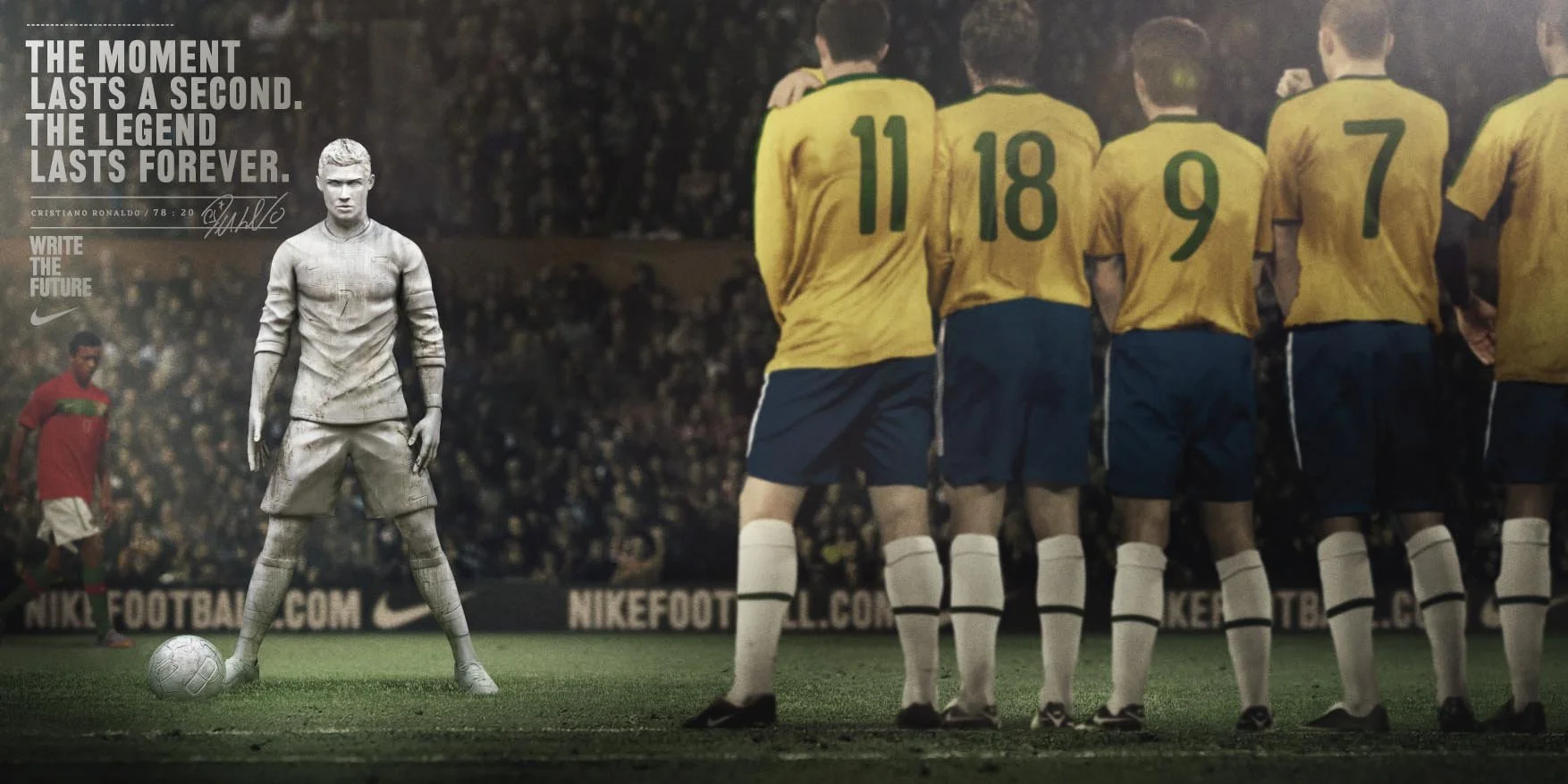
Nike executed the most successful ambush marketing campaign in sports history by dominating the 2010 World Cup conversation despite Adidas paying hundreds of millions for official sponsorship rights.
Why it worked:
Business impact: During the 2010 World Cup, Nike achieved higher share of voice and brand recall than official sponsor Adidas, verified by multiple independent brand tracking studies. Nike Football's Facebook following grew 336% during the tournament (from 1.1 million to 4.8 million). The three minute film generated over 50 million views across platforms and made Nike the most socially shared brand of the tournament, outperforming all official sponsors combined. Nike's football business revenue increased 30% year over year in the quarters surrounding the campaign, helping Nike overtake Adidas to become the world's number one football brand by revenue.
The campaign's commercial success forced FIFA to strengthen ambush marketing restrictions for subsequent tournaments, the clearest validation of its market impact.
Marketing strategy: Rather than compete through media buying (where Adidas had exclusive rights), Nike competed through content quality and emotional resonance. The film was a cinematic epic showing how a single World Cup moment could determine a player's entire future. In parallel realities, Cristiano Ronaldo either becomes a national hero with a giant statue or a ridiculed outcast living in poverty. Wayne Rooney is either knighted or tabloid disgraced. Every decision, every pass, every shot writes the future.
The film premiered simultaneously across Facebook, YouTube and Xbox Live, an unprecedented multi platform digital strategy in 2010 that bypassed traditional broadcast TV where Adidas had advertising lockouts. This digital first distribution became the template for modern sports campaign launches.
Featured athletes: Cristiano Ronaldo, Wayne Rooney, Didier Drogba, Franck Ribéry, with cameos from Roger Federer, Kobe Bryant and Homer Simpson, demonstrating Nike's cross sport dominance and cultural reach.
Cultural impact: "Write the Future" set the creative benchmark that all subsequent World Cup campaigns are measured against. Its success fundamentally changed how brands approach mega events: content quality and shareability matter more than official sponsor status. The campaign proved that earned media through exceptional creative execution can deliver greater commercial impact than paid media through official rights, a lesson that reshaped sports marketing strategy globally.
Industry recognition: Won Cannes Film Grand Prix (2011), the festival's highest creative honour. Also won Titanium and Integrated Gold Lions at Cannes, One Show Interactive Best of Show and every major creative award that year. The Cannes Film Jury President stated it was "head and shoulders" above all other entries. AdAge and Campaign both named it Campaign of the Year.
4. Red Bull Stratos (Felix Baumgartner Space Jump) (2012)

Campaign details:
Brand: Red Bull
Event: Felix Baumgartner's stratospheric skydive
Date: 14 October 2012
Location: Roswell, New Mexico
Investment: Estimated €50 million over seven years
Scientific partners: NASA engineers, aerospace manufacturers
On 14 October 2012, Austrian skydiver Felix Baumgartner stepped out of a pressurised capsule at 128,000 feet (39 kilometres), the edge of space, and fell for four minutes and 19 seconds, becoming the first human to break the sound barrier without a vehicle.
Why it worked:
Business impact: Red Bull Stratos achieved what traditional advertising could never accomplish: it created a genuine news event that global media had to cover, delivering earned media value estimated at over $6 billion. The jump set three world records simultaneously (highest freefall, highest manned balloon flight, first supersonic freefall without vehicle), ensuring permanent placement in record books with Red Bull's name attached.
9.5 million concurrent viewers made it the most watched live stream in YouTube history at that time (this record stood until 2017). The event was broadcast live in 50 countries by 40 television networks, reaching hundreds of millions of viewers. Red Bull's sales increased approximately 13% globally in the six months following Stratos, representing hundreds of millions in incremental revenue directly attributable to one event.
More significantly, Stratos marked Red Bull's complete transformation from energy drink company to media empire and lifestyle brand. It validated Red Bull Media House as a legitimate content producer capable of creating global events that compete with traditional sports broadcasts for audience attention.
Marketing strategy: Red Bull didn't sponsor an event, they created scientific history. Seven years of planning involved NASA engineers, aerospace manufacturers, medical specialists and extreme sports experts. The scientific legitimacy meant mainstream media had to cover it as news, not advertising, generating credibility and reach that paid advertising cannot deliver.
Crucially, the event itself contained no product placement beyond Red Bull logos on Baumgartner's suit and capsule. The drink was never mentioned. Instead, Red Bull associated itself with human achievement at the absolute edge of possibility, perfectly embodying its "gives you wings" tagline without ever stating it explicitly.
The live stream strategy pioneered a new model: brand as broadcaster. Red Bull owned the entire production, controlled all content and drove audiences to Red Bull owned channels, collecting first party data and building direct audience relationships rather than renting attention through third party media.
Cultural impact: NASA and other space agencies incorporated data collected from the jump into future spacesuit and capsule designs, giving Stratos lasting scientific value beyond marketing. The event entered popular culture permanently: references appear in films, TV shows and memes a decade later. It established the template for Red Bull's ongoing strategy of creating boundary pushing events (cliff diving, air races, extreme sports) that generate attention through newsworthiness rather than paid media.
Industry recognition: While Stratos didn't compete for traditional advertising awards (it wasn't an ad), it's now taught at business schools globally as the definitive case study in experiential marketing and brand as publisher strategy. Marketing and advertising publications universally rank it among the greatest marketing achievements of the 21st century.
3. Nike "You Can't Stop Us" (2020)
Campaign details:
Brand: Nike
Agency: Wieden+Kennedy Portland
Director/Editor: Oscar Hudson (director), Pulse Films (production)
Narrator: Megan Rapinoe
Launch: 30 July 2020
Historical context: COVID-19 pandemic, Black Lives Matter movement, all major sports suspended
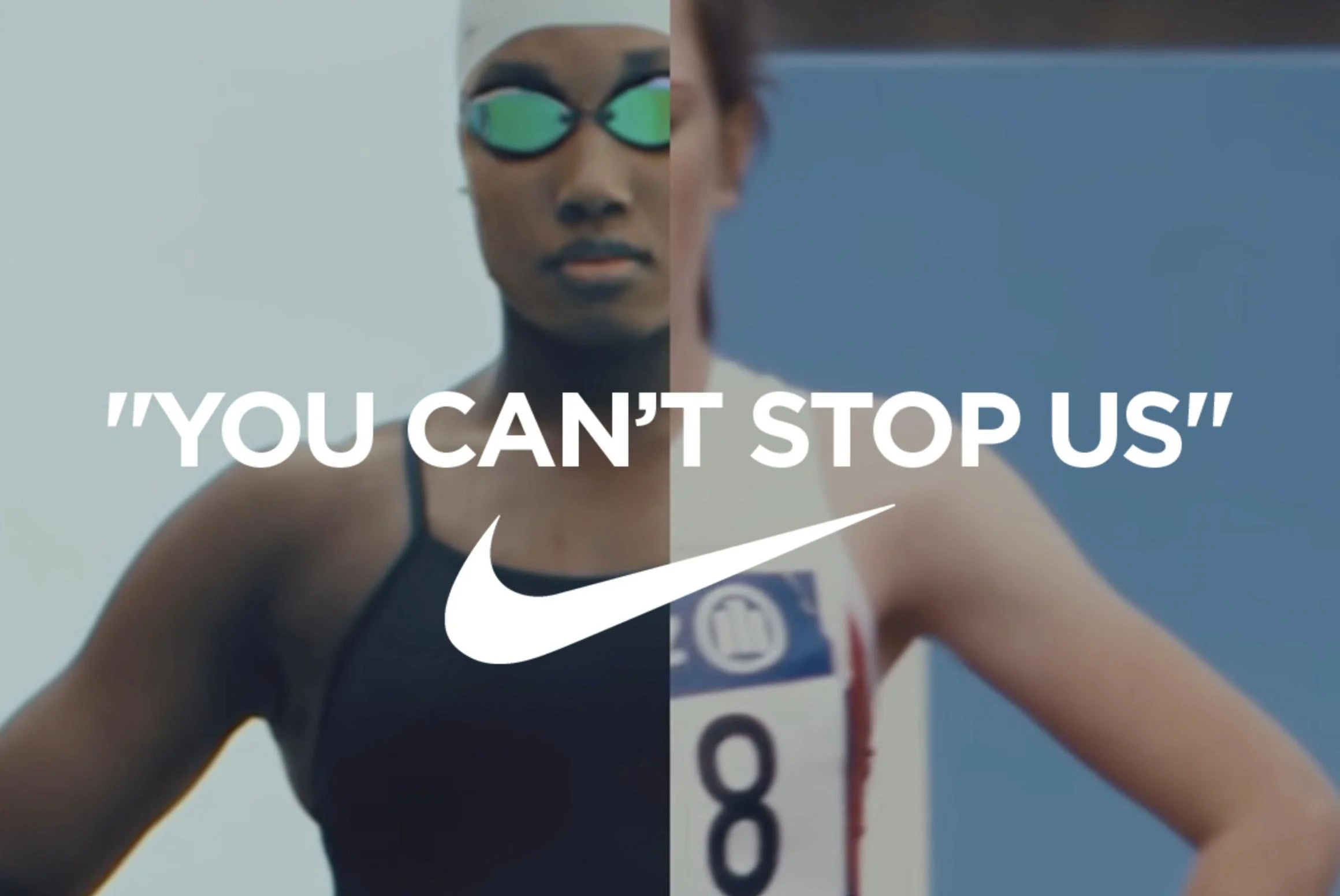
Released during the most significant disruption to global sport in modern history, this 90 second film used technically groundbreaking split screen editing to deliver a message about resilience, unity and the unifying power of sport when the world needed it most.
Why it worked:
Business impact: The film generated 32 million views within 24 hours of launch and $8.95 million in earned Media Impact Value in the first week, verified by third party measurement. Social engagement increased 300% compared to Nike's baseline during the campaign period. While quantifying direct sales impact during a pandemic is complex, Nike's digital business grew 82% year over year during the quarter following the campaign launch, significantly outperforming competitor growth rates. AdWeek named it Best Ad of 2020, beating thousands of entries across all categories.
The commercial impact extended beyond immediate metrics. At a time when all live sports were cancelled and sports brands faced existential relevance questions, Nike's campaign kept the brand central to the conversation, maintaining share of voice and brand affinity that translated to market share gains when sport resumed.
Marketing strategy: The creative team searched through 4,000 pieces of sports footage to find exact movement matches across different athletes, sports, genders and abilities. The technical execution required over 1,000 hours of compositing work to create seamless transitions: a male basketball player's layup transitioning perfectly into a female swimmer's dive, a wheelchair rugby collision matching a tackle in American football.
The 90 second film featured 36 pairs of athletes (72 total athletes) across 24 different sports, representing extraordinary diversity: different genders, races, abilities, ages and sport disciplines. The pairings made powerful statements without words: Olympic champions paired with everyday athletes, able bodied athletes transitioning to Paralympic athletes, demonstrating that sport's essential nature transcends all divisions.
Megan Rapinoe's narration delivered the message: "We're never alone, and that is our strength. Because when we're doubted, we'll play as one. When we're held back, we'll go farther and harder. If we're not taken seriously, we'll prove that wrong. And if we don't fit the sport, we'll change the sport. We'll stand up for each other. And when things aren't fair, we'll come together for change. Because we're not going back. We're moving forward. We'll keep making history. Breaking barriers. And building a better future. For everyone. Because you can't stop sport."
Cultural impact: The campaign became a symbol of perseverance and hope during a moment of profound global uncertainty. The split screen technique has since been widely imitated across advertising, a clear sign of cultural impact. The film resonated beyond sports fans, becoming a rallying cry for resilience across industries and contexts during the pandemic.
The message proved prescient: sport did return, and when it did, Nike's brand health metrics and commercial position were stronger than before the pandemic, while many competitors struggled. The campaign validated that powerful emotional storytelling maintains brand relevance even when core business operations are disrupted.
Industry recognition: Won Emmy Award for Outstanding Commercial (2021), beating all other commercials across all categories. Won Cannes Film Grand Prix (2021), making it one of only a handful of campaigns to win both Emmy and Cannes Grand Prix, the highest honours in US and global advertising respectively. Also won Clio Sports Gold, One Show Gold Pencil and numerous other industry awards.
2. Nike "Winning Isn't For Everyone" (2024 Paris Olympics)
Campaign details:
Brand: Nike
Agency: Wieden+Kennedy Portland
Narrator: Willem Dafoe
Launch: 19 July 2024 (one week before Paris Olympics opening ceremony)
Strategic context: Nike facing revenue decline, losing market share to Hoka and On Running
Media investment: Nike's largest ever Olympic media spend
Nike's most provocative Olympic campaign challenged the fundamental premise of Olympic values themselves, sparking massive controversy while delivering record breaking commercial results.
Why it worked:
Business impact: The campaign generated 12+ billion impressions worldwide, making it Nike's biggest Global Brand Voice campaign in over a decade according to Nike's own measurement. It achieved over 4 billion views globally across all platforms. Nike reached 90% of all Gen Z and Millennials in the United States, the brand's core growth demographic.
According to NBC and Material+ measurement, Nike ranked as the number one Olympic sponsor across all measured metrics, outperforming official Olympic Partners despite spending less on rights fees. The campaign achieved 18% lift in message memorability compared to competitor Olympic campaigns among Nike's priority audiences, validated by NBC and Kantar research.
Nike athletes dominated the Paris Olympics podium, appearing constantly in gold medal moments, which multiplied the campaign's earned media value. The campaign's controversy generated hundreds of millions in additional earned media as news outlets, social media and cultural commentators debated the message, delivering reach that paid media alone could never achieve.
Marketing strategy: The campaign took a calculated risk: explicitly rejecting the traditional Olympic values of participation, friendship and shared experience in favour of celebrating raw competitive obsession. Willem Dafoe's menacing narration delivered lines designed to provoke: "Am I a bad person? Tell me I'm a bad person. Winning isn't for everyone. It's for those willing to do whatever it takes."
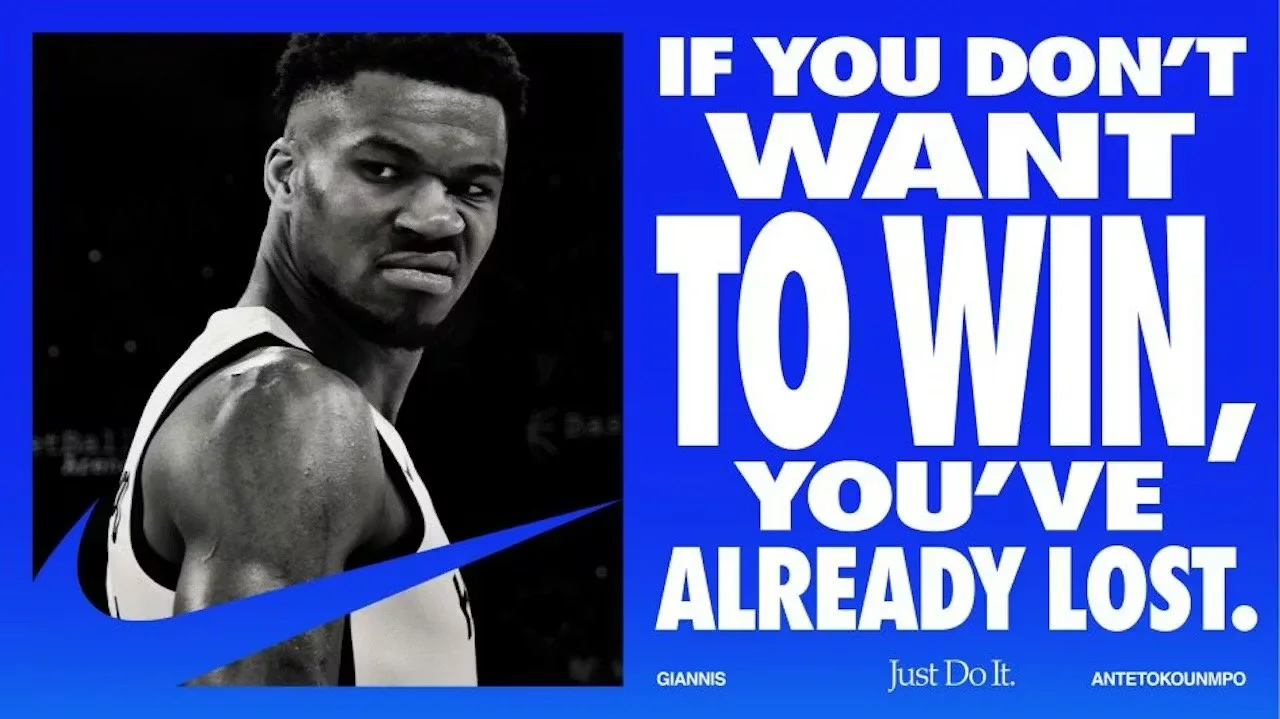
The 90 second anthem film featured Nike's biggest stars in moments of intense competition: LeBron James, Kobe Bryant, Serena Williams, Giannis Antetokounmpo, Sha'Carri Richardson, Cristiano Ronaldo, A'ja Wilson and others, all shown in grimacing, aggressive, obsessive pursuit of victory. The visuals reinforced the message: greatness requires traits that polite society considers unhealthy: obsession, aggression, egotism, lack of empathy.
Nike deliberately courted controversy. In a media environment where participation trophies and mental health sensitivity dominate discourse, Nike bet that elite athletes and aspiring competitors would respond to permission to embrace competitive intensity without apology. The strategy worked: athletes globally shared the content with captions like "finally someone said it."
The campaign extended beyond the anthem to athlete specific films, massive outdoor advertising (the entire facade of Paris's Centre Pompidou), and social media activations that kept Nike central to Olympic conversation throughout the Games. Individual athlete films, particularly the one honouring Iranian taekwondo star Kimia Alizadeh, generated hundreds of thousands of engagements, demonstrating the campaign's global resonance.
Cultural impact and controversy: The campaign sparked intense debate. Critics called it "toxic," "unsportsmanlike" and a rejection of Olympic values. Fernando Desouches of BBD Perfect Storm wrote in The Drum that the messaging was "very, very worrying" and could validate "narrow definitions of winning" for young people. Ipsos research showed the ad scored exceptionally high on uniqueness, talkability and surprise but struggled on warmth and likability.
Supporters countered that Nike was simply acknowledging what elite athletes actually feel, rejecting false narratives about sport being purely about participation and fun. The Athletic and other sports media praised the campaign for its honesty about competitive drive.
The controversy itself was strategic value. In a fragmented media environment, forcing cultural conversation is more valuable than pleasant ads that everyone ignores. Nike's willingness to be polarising kept it dominant in conversation throughout the Olympics.
Industry recognition: Too recent for major award cycles, but early indications suggest significant recognition ahead. Won several regional advertising awards and featured prominently in end of year "best campaigns" lists across major industry publications. The campaign's measurable commercial success (12B+ impressions, #1 Olympic sponsor ranking) will likely translate to effectiveness awards at Cannes and similar festivals.
1. Nike "Dream Crazy" featuring Colin Kaepernick (2018)

Campaign details:
Brand: Nike
Agency: Wieden+Kennedy Portland
Launch: 5 September 2018 (30th anniversary of "Just Do It")
Campaign spokesman: Colin Kaepernick (former NFL quarterback)
Tagline: "Believe in something. Even if it means sacrificing everything."
Extended execution: "Dream Crazier" (2019) narrated by Serena Williams
Nike's most polarising and ultimately most successful brand activism campaign in history took a clear stance on social justice, risking immediate backlash for long term brand positioning with values driven consumers.
Why it worked:
Business impact: Sales surged 31% the weekend immediately after the ad debuted, compared to the same weekend the previous year. Nike's stock price, which dipped 3% on initial controversy, recovered within days and hit an all time high within weeks. The company added approximately $6 billion in brand value according to Edison Trends and Apex Marketing Group analysis. The campaign generated $163 million in earned media value (equivalent advertising value) according to Apex Marketing Group measurement, as global news outlets covered the controversy.
Nike's online traffic increased 27% in the week following launch. Perhaps most tellingly, Nike's Net Promoter Score (NPS) among consumers under 30 increased significantly, while declining slightly among consumers over 50. This validated Nike's strategic bet: alienate older consumers who weren't growth drivers to strengthen brand loyalty among younger, diverse, values driven consumers willing to pay premium prices.
Follow up research showed 67% of Nike customers supported the campaign, while only 12% opposed it strongly enough to boycott. Among Nike's target demographic (18-34 year olds), support exceeded 75%. The campaign fundamentally strengthened Nike's position with its most valuable audience segment.
Marketing strategy: Nike made a calculated decision to move from simply promoting athleticism to taking an explicit public stance on racial justice and police brutality, complex and divisive political issues in the United States. Colin Kaepernick, the former NFL quarterback who sparked controversy by kneeling during the national anthem to protest racial injustice (and was subsequently blacklisted from the NFL), became the face of Nike's 30th anniversary "Just Do It" campaign.
The genius was recognising that brand neutrality had become a liability with younger consumers. Millennials and Gen Z expect brands to have values and take stands on social issues. By supporting Kaepernick at the height of controversy around his protests, Nike signaled it was willing to sacrifice short term sales and cultural comfort to stand for something meaningful.
The 30 second anthem film featured everyday athletes overcoming obstacles, interspersed with images of Kaepernick and the provocative tagline. Extended versions featured athletes with disabilities, Muslim athletes in hijabs and other representations that challenged narrow definitions of who gets to be an athlete or American hero.
The follow up "Dream Crazier" (2019), narrated by Serena Williams, extended the message to explicitly champion female empowerment: "If we show emotion, we're called dramatic. If we want to play against men, we're nuts. And if we dream of equal opportunity, we're delusional. When we stand for something, we're unhinged. When we're too good, there's something wrong with us. And if we get angry, we're hysterical, irrational, or just being crazy."
Cultural impact: The campaign transcended sports marketing entirely, becoming a flashpoint in broader cultural conversations about racial justice, corporate responsibility, free speech and the role of athletes in society. It forced competitors to either take positions or explain their neutrality, fundamentally changing industry norms. Prior to "Dream Crazy," sports brands generally avoided political stances. After it, brand activism became an expected part of sports marketing, particularly for Nike's competitors trying to differentiate themselves.
The campaign influenced sectors beyond sports. Brands across industries felt pressure to articulate their values and take public stances on social issues, a shift directly traceable to Nike proving it was commercially viable and strategically valuable. #JustDoIt trended globally with hundreds of thousands of people sharing stories about overcoming barriers, making Nike part of a genuine social movement rather than just selling shoes.
Industry recognition: Won three Cannes Lions Grand Prix, the festival's highest honours, in three different categories: Outdoor (2019), Entertainment for Sport (2019) and Creative Effectiveness (2021, recognising the sustained commercial and cultural impact). Won Emmy Award for Outstanding Commercial (2018), Nike's first Emmy in 17 years. Cannes jurors called the image of Kaepernick "one of the most iconic in advertising in recent years."
The Creative Effectiveness Grand Prix, awarded two years after launch, is particularly significant. It validated that the campaign didn't just generate buzz but delivered sustained commercial results and brand value growth, the ultimate measure of marketing success.
Comparative Analysis:
What the Top 10 Reveal About Modern Sports Marketing
| Rank | Campaign | Year | Brand | Commercial Impact | Industry Awards | Cultural Legacy |
|---|---|---|---|---|---|---|
| 1 | Dream Crazy (Kaepernick) | 2018 | Nike | +31% sales, +$6B brand value, $163M earned media | 3x Cannes GP, Emmy | Changed brand activism norms globally |
| 2 | Winning Isn't For Everyone | 2024 | Nike | 12B+ impressions, 90% Gen Z reach, #1 Olympic sponsor | Pending major awards | Sparked Olympic values debate |
| 3 | You Can't Stop Us | 2020 | Nike | 32M views/24hrs, +300% engagement, Best Ad 2020 | Cannes GP, Emmy | Pandemic resilience symbol |
| 4 | Red Bull Stratos | 2012 | Red Bull | +13% sales, $6B earned media, 9.5M live viewers | Case study standard | Pioneered brand-as-broadcaster |
| 5 | Write the Future | 2010 | Nike | +30% football revenue, 50M views, beat official sponsor | Cannes Film GP, Titanium | Set World Cup campaign benchmark |
| 6 | Superhumans Trilogy | 2012-21 | Channel 4 | Paralympics sold out, 20M viewers by 2021 | 3x Cannes GP, D&AD Black | Changed disability representation |
| 7 | Thank You, Mom | 2010-21 | P&G | +$500M sales (2012 alone), 76B impressions | 2 Gold Cannes, Emmy | "Proud sponsor of" format pioneer |
| 8 | This Girl Can | 2015 | Sport England | 2.8M women activated, £3.94 ROI per £1 | 5 Gold Creative Circle, D&AD | Body positivity movement catalyst |
| 9 | Impossible is Nothing | 2004 | Adidas | +15% sales year one, 20+ year platform longevity | 120 years top moments | Challenged Nike storytelling dominance |
| 10 | I Will What I Want | 2014 | Under Armour | +28% women's sales, 3.5B impressions, 9M+ video views | Cannes Cyber GP (sole winner) | Expanded athletic representation |
Looking across all ten campaigns, several patterns emerge that define what separates iconic work from merely good advertising.
Pattern 1: Purpose Over Product
Not a single campaign in the top 10 explicitly sells a product. Nike's "Dream Crazy" doesn't mention shoes. P&G's "Thank You, Mom" doesn't showcase laundry detergent. Sport England's "This Girl Can" isn't trying to sell anything at all.
The most successful sports marketing campaigns understood that emotional connection, cultural resonance and values alignment drive commercial outcomes more powerfully than product features or promotional offers. They sold meaning, not merchandise, and the merchandise sales followed as a consequence.
Pattern 2: Calculated Risk Defines Winners
Every campaign took significant risks:
Nike risked alienating half its customer base with Kaepernick
Channel 4 risked offending disability communities by rejecting "inspiration porn" narratives
Red Bull risked catastrophic failure (and potentially a human death) with Stratos
Nike again risked backlash by rejecting Olympic values with "Winning Isn't For Everyone"
The campaigns that played it safe, that tested well in focus groups, that avoided controversy, simply don't appear on this list. The brands willing to polarise, to take a stand, to risk short term backlash for long term positioning are the ones that achieved cultural transcendence and sustained commercial impact.
Pattern 3: Cultural Timing Amplifies Impact
Great campaigns don't create cultural moments, they recognise and amplify them:
"Dream Crazy" landed as racial justice protests intensified globally
"You Can't Stop Us" spoke to pandemic era anxieties about isolation and resilience
"This Girl Can" launched as body positivity conversations reached mainstream
"Winning Isn't For Everyone" challenged participation culture when competitive intensity had become culturally suspect
The pattern reveals that timing matters as much as creative execution. The same campaigns launched five years earlier or later would have achieved different results because the cultural context shapes reception.
Pattern 4: Technical Innovation Enables Breakthrough Creative
Several campaigns pioneered new production techniques that competitors rushed to copy:
"You Can't Stop Us" split screen matching across 4,000 footage pieces
"Write the Future" cinematic production values in sports advertising
"Impossible is Nothing" digital manipulation of archival footage
Red Bull Stratos live streaming a global event to record audiences
Technical innovation isn't about technology for its own sake but about enabling creative executions that weren't previously possible. The campaigns that pushed technical boundaries created work that felt genuinely new, generating additional attention simply from "how did they do that" factor.
Pattern 5: Long Term Commitment Compounds Value
The most valuable campaigns weren't one off executions but sustained platforms:
P&G ran "Thank You, Mom" for 11 years across six Olympic cycles
Channel 4 evolved "Superhumans" across three Paralympics over nine years
Adidas has revived "Impossible is Nothing" multiple times over 20 years
Nike's entire brand is built on "Just Do It" platform launched in 1988
One off campaigns can win awards and generate buzz, but sustained platforms compound brand equity over time, becoming part of brand DNA rather than just memorable advertising. The campaigns with staying power delivered exponentially more commercial value than their single year media spend would suggest.
The Honourable Mentions
Gatorade "Be Like Mike" (1991-1993)
Why it's historically significant: Pioneered the aspirational athlete endorsement model that defined sports marketing for three decades. At the height of Michael Jordan's NBA dominance, the campaign drove Gatorade revenues from $681 million to over $1 billion in a single year, cementing Gatorade's sports drink category dominance that persists today. The catchy jingle and "Be Like Mike" phrase entered cultural lexicon and remains instantly recognisable 30+ years later.
Why it didn't make top 10: Released in 1991, it falls outside our primary focus on modern campaigns (2000-2025) and didn't win major industry awards that validate the top 10. Its significance is more historical than representing cutting edge modern practice.
Nike "The Cage" / Secret Tournament (2002)
Why it's significant: Ahead of the 2002 FIFA World Cup, Nike created a gritty, fast paced underground tournament featuring 24 global football icons including Ronaldinho, Thierry Henry, Luis Figo and Francesco Totti in a caged structure on a cargo ship. The execution defined the aesthetic of football marketing for the subsequent decade and became a cult favourite among football fans globally.
Why it didn't make top 10: While culturally beloved and aesthetically influential, "The Cage" lacked the measurable commercial impact and industry award recognition of "Write the Future" (2010). When forced to choose between Nike's World Cup campaigns, "Write the Future" won Cannes Film Grand Prix and achieved documented commercial superiority, making it the more defensible selection for the definitive list.
Beats by Dre "The Game Before The Game" (2014 FIFA World Cup)
Why it's significant: A five minute film focusing on pre match rituals of stars like Neymar Jr and LeBron James, positioning Beats headphones as essential performance equipment. The campaign achieved 26 million YouTube views, 117 million impressions and contributed to 130% sales growth internationally. It's a masterclass in ambush marketing, dominating World Cup conversation without official FIFA sponsorship.
Why it didn't make top 10: Strong commercial performance but lacked the cultural transcendence and sustained impact of campaigns that made the final list. Beats achieved a moment of buzz rather than permanent cultural shift.
London 2012 Opening Ceremony: James Bond and The Queen
Why it's significant: In a moment of pure British creativity, a short film showed James Bond escorting Queen Elizabeth II via helicopter to the Olympic Stadium, with the Queen (played by a stunt double) apparently parachuting into the venue. The spectacle drew global attention and positioned the London Olympics as both serious sporting event and cultural celebration.
Why it didn't make top 10: While spectacular and memorable, this was an Olympic organising committee production rather than a brand campaign. It lacked the commercial objectives, sustained platform and industry award validation that define the other entries.
ESPN "This Is SportsCenter" (1995-2024)
Why it's significant: One of the longest running advertising campaigns in television history at nearly 30 years. Over 400 commercials featured virtually every major sports figure in humorous scenarios at ESPN's headquarters, creating a template for mockumentary sports advertising widely imitated by competitors.
Why it didn't make top 10: While influential and long running, the campaign was primarily about media brand building rather than connecting with broader cultural movements or driving measurable commercial transformation at the scale of top 10 entries.
Nike "So Win" (2025 Super Bowl)
Why it's significant: Nike's first Super Bowl commercial in 27 years featured authentic stories of female athletes (Sabrina Ionescu, Sha'Carri Richardson, A'ja Wilson, Caitlin Clark) overcoming adversity. The striking black and white video used powerful visual storytelling, and the Nike logo appeared 819 times across 521 frames, making it the most visible brand during Super Bowl LIX. AdWeek considered it one of the best Super Bowl ads of 2025.
Why it didn't make top 10: Too recent to assess long term cultural impact and sustained commercial results. While creatively strong and strategically timed to women's sports growth, it needs time to demonstrate whether it achieves lasting influence comparable to top 10 campaigns. Will be reconsidered for future list updates.
Key Insights for Marketing Professionals
If you're building sports marketing campaigns, studying these 10 reveals actionable principles:
1. Measure your risk appetite accurately
The campaigns that achieved transcendence all took significant risks that made stakeholders uncomfortable. If your campaign doesn't have internal critics saying "this might backfire," you're probably playing too safe to achieve breakthrough results. The key is taking calculated risks where potential upside justifies downside, not reckless risks without strategic rationale.
2. Invest in production quality
Every campaign in the top 10 demonstrated exceptional craft: cinematic direction, technical innovation, meticulous editing. Production quality signals brand quality and increases shareability. Audiences can immediately distinguish between work that looks expensive and work that looks cheap, and production value creates a halo effect on brand perception.
3. Plan for platform longevity, not one off buzz
The campaigns with greatest commercial impact weren't single executions but sustained platforms that evolved over years. If you're investing significantly in campaign development, build strategic architecture that allows evolution across multiple years and executions, not just one launch.
4. Cultural insight matters more than creative concept
The difference between good and great campaigns wasn't creative execution quality (all were excellent) but depth of cultural insight. "This Girl Can" succeeded because it identified the precise psychological barrier preventing women from exercising. "Dream Crazy" succeeded because it recognised younger consumers expect brands to have values. Deep cultural insight, validated through research, is the foundation on which great creative builds.
5. Measure what matters, not just what's easy
Every top 10 campaign demonstrated commercial impact beyond vanity metrics like impressions or views. They drove sales increases, brand value growth, market share gains or measurable behaviour change. If you can't articulate the commercial objective your campaign serves, you're creating advertising, not marketing.
FAQs:
What makes a sports marketing campaign truly successful?
Based on analysis of the top 10 campaigns, success requires excellence across three dimensions simultaneously: industry recognition (winning major creative awards like Cannes Grand Prix), commercial impact (driving measurable sales, brand value or behaviour change) and cultural transcendence (sparking conversations beyond marketing and sports circles, remaining relevant years after launch). Campaigns that excel in only one or two dimensions don't achieve iconic status.
Why does Nike dominate this list with five entries?
Nike's dominance (Dream Crazy, Winning Isn't For Everyone, You Can't Stop Us, Write the Future, plus honourable mention The Cage) reflects the company's sustained commitment to breakthrough creative work, willingness to take calculated risks that competitors avoid, and consistent partnership with world class creative agency Wieden+Kennedy Portland. Nike invests more in creative development and accepts more short term risk for long term brand building than competitors, resulting in disproportionate representation among history's most successful campaigns.
How did Red Bull's Stratos space jump impact marketing strategy?
Red Bull Stratos fundamentally changed how brands approach content creation by proving that brands can create newsworthy events that compete with traditional sports broadcasts for audience attention. It pioneered the "brand as broadcaster" model where brands own content production and distribution rather than buying advertising within other people's content. This shift influenced sports marketing across the industry, with brands increasingly investing in owned events, documentaries and content properties rather than just traditional advertising.
Why was Nike's Colin Kaepernick campaign controversial yet commercially successful?
The campaign succeeded because Nike made a calculated strategic decision to prioritise deep loyalty from its core demographic (consumers under 35) over maintaining neutrality with older consumers who weren't growth drivers. While some consumers boycotted Nike, research showed 67% of Nike customers supported the campaign and support exceeded 75% among 18-34 year olds. The controversy generated $163 million in earned media value, and younger consumers willing to pay premium prices became more loyal to the brand. This validated that values aligned marketing drives long term value even when it risks short term backlash.
How can smaller brands compete with Nike's marketing budget?
The top 10 list includes campaigns from government funded Sport England and broadcaster Channel 4, proving that budget size doesn't determine impact. Sport England's "This Girl Can" activated 2.8 million women with modest spend through cultural insight and authentic representation. The key is identifying precise cultural or psychological barriers, creating genuinely helpful or emotionally resonant content, and focusing resources on platforms where your audience actually consumes content rather than spreading budget across traditional media. Depth of insight and authenticity of message matter more than media spend.
What role do industry awards play in campaign success?
Awards serve as third party validation that separates genuinely excellent work from campaigns with inflated internal metrics. Every campaign in the top 10 won Cannes Grand Prix, D&AD Black Pencil, Emmy Award or equivalent highest tier recognition, confirming that creative excellence and commercial success correlate. Awards also influence hiring decisions, agency reputations and brand credibility, making them commercially valuable beyond trophies. However, awards alone don't guarantee inclusion: several award winning campaigns didn't make the list because they lacked sufficient commercial impact or cultural transcendence.
Final Thoughts
These campaigns prove definitively that great sports marketing transcends product promotion entirely. It becomes cultural commentary, social catalyst, entertainment property or human interest story that happens to feature a brand.
The common thread across all 10: they understood that sport is fundamentally about human aspiration, identity and meaning. Athletic achievement is the vehicle, but the destination is always emotional connection, values alignment and cultural resonance.
For brands and marketers, these campaigns offer the blueprint: take calculated risks, invest in exceptional production quality, focus on cultural insight over creative gimmicks, plan for sustained platforms rather than one off executions, and measure commercial outcomes, not vanity metrics.
The landscape continues evolving. AI generated content, virtual influencers, Web3 activations and emerging platforms will create new creative possibilities. But the fundamental principles revealed by studying history's greatest campaigns remain constant: purpose over product, calculated risk over safety, cultural insight over creative concept, sustained commitment over one off buzz.
Analysing historic campaigns is valuable. Designing the next one requires forward looking strategy, executive level thinking and the ability to move fast when cultural or market windows open.
Need Help Implementing These Strategies?
With 15 years scaling global sports and entertainment properties, I now work as a fractional CMO helping brands turn marketing into measurable commercial results. Whether you need diagnostic strategy, urgent launch leadership or ongoing fractional CMO support, I embed with your team to deliver results.
Flexible engagement models from day rates to retained partnerships.
Former Marketing Director E1 Series | Head of Marketing SailGP | Senior Marketing Manager Formula E
Sources and Methodology Notes:
This analysis draws from verified sources including Cannes Lions archive, Emmy Award database, D&AD Annual reports, company financial filings, third party measurement from Nielsen, Kantar, Edison Trends and Apex Marketing Group, industry publications (AdAge, Campaign, The Drum, AdWeek), agency case studies and business school case materials from Harvard Business School, Wharton and similar institutions.
Campaign metrics are verified through multiple independent sources where possible. Where exact figures weren't publicly available, conservative estimates based on industry standard measurement methodologies are noted. All award claims are verified through official award body records.
