
When the capital changes faster than the business
The sports industry is reading the LIV Golf story wrong.
On Thursday 30 April 2026, the PIF confirmed it would stop funding LIV after the 2026 season. The number that has been doing the rounds is $5bn invested since 2022, projected to hit $6bn by the end of this year. The headlines are about the players, the PGA Tour and whether LIV survives.
That is the obvious story. It is not the interesting one.
The interesting one is what this tells us about how capital actually moves through sport, and what happens to everyone downstream when it moves.
The business was working
Set aside whether you like LIV, whether the team format works, whether Saudi capital should be in golf. Look at the operating numbers LIV themselves have put on the record.
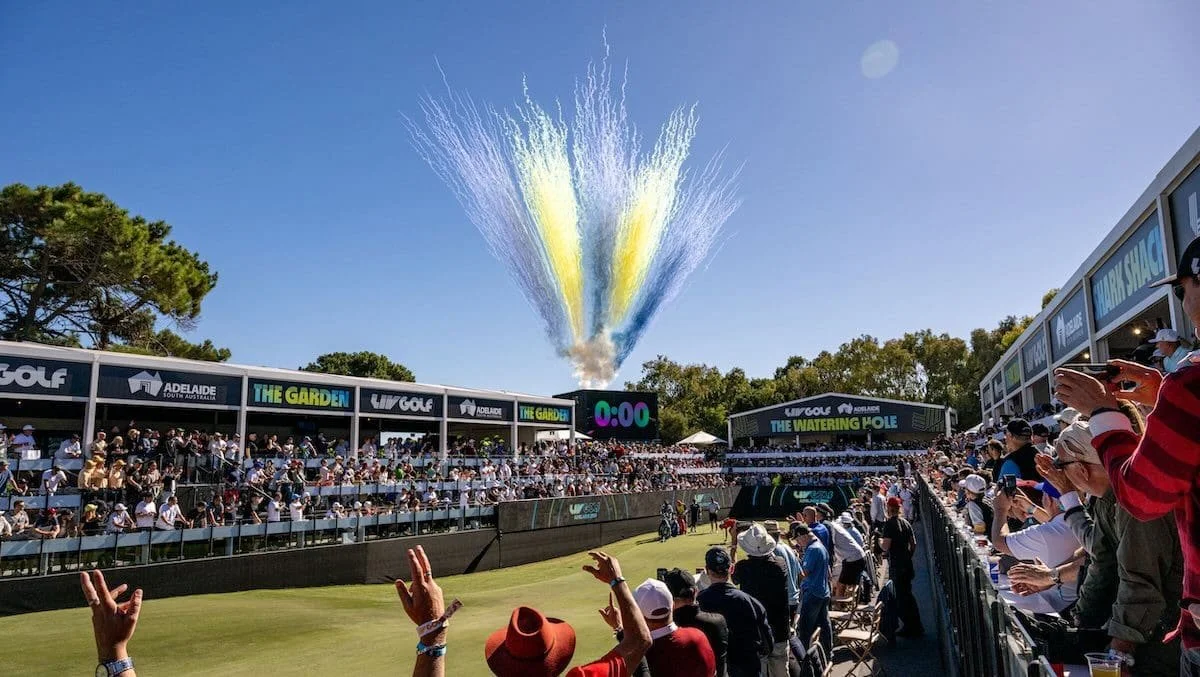
Adelaide drew 115,000 fans across 4 days in February. Saturday alone pulled 38,500, the largest single day crowd in LIV history. The South Africa debut sold 90,000 tickets. The event has been voted World's Best Golf Event 3 years running. LIV say sponsorships are up 40% year on year, ticket sales up 129%, and the league is on track to do $100m of revenue across its first 5 events of 2026.
Their own CEO Scott O'Neil put profitability 5 to 10 years out. Long horizon, but a real business plan with a real audience showing up.
This is not the profile of a failed product. It is the profile of an early stage business that needed more time and more capital to mature. The crowds are real. They are audiences that actually show up, which is the hardest part of building a sports property from scratch.
What changed is not the business. What changed is the capital.
The macro got in the way
The PIF released its 2026 to 2030 strategy a couple of weeks before the LIV announcement. LIV was not in it. The new strategy uses the language of sustained value creation, efficiency and governance. Translation: the era of writing very large cheques for long horizon bets is over for now.
The macro pressures are public. Aramco's base dividend has been cut by roughly a third, which feeds straight into PIF's funding pipeline. Saudi defence spending is up. Construction commitments across Vision 2030 have been narrowed sharply, with The Line suspended and Neom restructured. Expo 2030 and the 2034 FIFA World Cup are mounting commitments PIF has to absorb. The PIF themselves cited macro dynamics in their own statement.
The pattern across PIF sport investments tells the same story. Al-Hilal sold. Saudi-led Rugby World Cup bid abandoned. The Saudi Snooker Masters cancelled, replaced in the calendar by an event with roughly half the prize money. Newcastle United is understood to be unaffected and continues to perform commercially, which fits the new framing because it is a returns generating asset.
The PIF is recalibrating to a harder economic environment, and sport is one of the line items getting trimmed.
The conversation has skipped a step
Most of the coverage I have read this week treats this as a story about LIV, the players and the PGA Tour. Some of it borders on celebratory, as if a competitive threat to the established order is being neutralised.
That reading misses what is actually happening underneath.
When a $5bn programme winds down, the cost spreads outward through the supplier chain. The agencies who built activations. The venues with multi year hosting deals. The production companies, the hospitality operators, the tech vendors, the talent representatives. The staff who relocated for jobs that were meant to last a decade. The fans in Adelaide and South Africa who turned up and were told this was theirs for the long term.
I have worked inside Formula E and E1 Series. I went to LIV's UK event. I have been in the room when sovereign capital decisions get made and felt, and I have been on the staff side of properties that depend on them. The downstream impact of these decisions is real and it is rarely talked about.
The industry instinct, when news like this lands, is to look at the marquee names and ask if they survive. The more useful instinct is to look at the network of small businesses, freelancers and full time staff whose income depends on the property continuing, and ask what happens to them.
What this actually says about sport
The structural lesson here is not about Saudi Arabia. It is about capital and commercial performance pulling apart, and how often the industry collapses the two into one conversation.
Sport has had a decade of capital that was looking for a home. State backed funds, private equity, family offices, media companies. The thesis for most of those bets was long horizon and patient. The macro that supported the thesis is changing. Some of that capital is going to step back. Some of it is going to step back from properties that, on their own operating numbers, were doing fine.
When that happens, the question for any sports property is not whether the business is working. The question is whether the capital structure can survive the macro environment that exists today, not the one that existed when the cheque was written.
That is a different conversation, and most properties are not having it yet.
One of the more interesting things happening where motoring meets golf is Long Drive Club, a new UK members' club for car people who golf. It treats the road there and the round at the end as one day, not two, with 20 places filled by application and the first drive set for September 2026.
What this signals to the rest of the capital in sport
Saudi capital has been transformational across global sport over the past 5 years. Whatever your view on it, the impact has been real: events, prize money, infrastructure, jobs, fan experiences. A lot of that ecosystem is built on the assumption that the cheques would keep coming.
Now we have the first explicit signal that the cheques will not always keep coming. The 2026 to 2030 strategy is a polite way of saying the bar has moved.
Other capital sources will be reading this carefully. Private equity is. Family offices are. Sovereign wealth funds in other regions are. The next round of conversations between sports properties and their backers will be different from the last round, and that conversation is going to set what actually works in sports marketing right now.
That is the story. Not who wins between LIV and the PGA Tour. The story is what it tells everyone in sport about the conditions for the capital that funds them.
The properties that come through this best will be the ones that can answer a harder question than they have had to answer in years: are we a business, or are we a programme that depends on a single funding source. Most cannot answer that cleanly. The ones that can will be the ones that define the next era.
The era of capital chasing sport is ending. The era of sport having to earn capital is starting. Worth paying attention to that, rather than celebrating who got knocked over on the way through.
