

Marketing Trends 2027: 10 Predictions for CEOs as AI Rewrites How Customers Buy
In 2027 AI becomes the front door to your business. Buyers meet you in an AI answer, then judge you in seconds. Here are 10 predictions for CEOs on brand, teams, token costs, PR and quality control, built on Anthropic, ONS and IPA data and first hand experience of building with AI.

How to Measure Marketing Effectiveness in 2027: Why Performance Metrics Only Tell Part of the Story
Performance metrics were built to measure ads. Most businesses now use them to judge all of marketing. Here is how to measure marketing effectiveness on both sides in 2027, with sourced data on what dashboards miss, what really drives growth and why AI sameness makes brand and reputation matter more.

Lead Generation Strategies 2027: How to Keep Your Pipeline Full as AI Changes How Customers Find You
Most buyers pick their shortlist before they speak to you. AI now helps them build it. Here are 7 lead generation strategies that hold up in 2027, with sourced data on how B2B and consumer buyers find suppliers, UK cold email rules and what to report to the board.

How Much Should You Spend on Marketing in 2027? A Guide for UK CEOs
The right marketing budget is the one your acquisition maths can pay back. Here is a 4 step method for UK CEOs setting a 2027 budget, with worked examples in pounds, what marketing people really cost and why the same budget buys less this year.

Marketing Spend as a Percentage of Revenue by Industry: UK Benchmarks 2027
Most marketing budget benchmarks quoted to UK founders come from US surveys or no source at all. The real numbers tell a different story. Smaller companies spend almost twice the headline average. Here is what companies actually spend by industry, size and business model, and what to plan for in 2027.
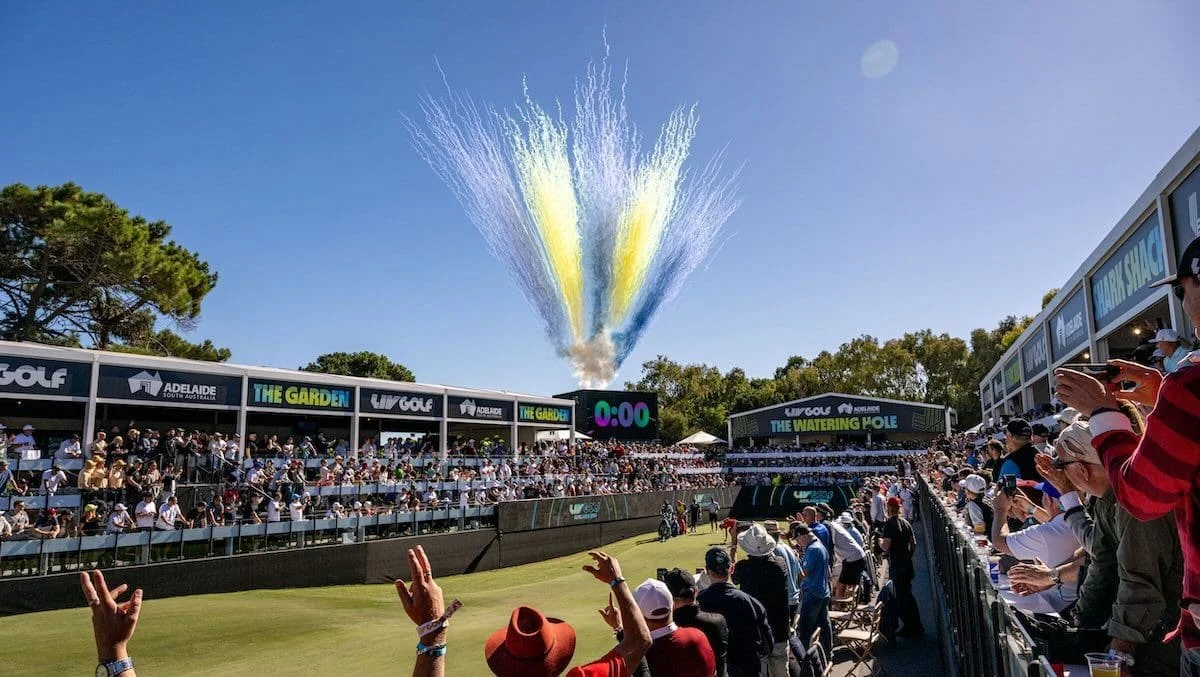
When the capital changes faster than the business
PIF will stop funding LIV Golf after the 2026 season. The headlines are about the players. The real story is about what this signals to every other capital source watching sport right now.

America Wants the World Cup. It Doesn't Want the World.
The 2026 World Cup should be the cleanest commercial story in sport. Instead it is one of the most complicated sporting moments of a generation. Here is what that means for every brand inside it.

Sport's Neutrality Problem: What the Next Generation of Commercial Deals Looks Like
Sport built its commercial model on political neutrality. Three events in March 2026 proved that assumption has collapsed. Here is what the next generation of sponsorship and hosting deals looks like.

The Hidden Cost of Free Attention
Free attention feels like momentum. It rarely is. In sport and growth businesses alike, visibility is rising while conversion is falling. This article breaks down the structural gap between reach and revenue, and what needs to change to close it.

The Attention Era Is Over. The Revenue Era Has Begun.
Attention in sport has never been higher. Revenue has never been harder to secure. This article explains why visibility stopped converting and how the smartest properties are rebuilding marketing as commercial infrastructure.

Strategic Advisor: One of London’s Fastest Growing Roles in 2026
Strategic Advisor is now one of London’s fastest-growing roles, but the demand isn’t about more strategy. It reflects a widening gap between strategic intent and commercial outcomes. This article explores what companies are really buying when they hire advisors and why marketing economics is where most strategies still fail to convert.

The 2026 Sports Content Framework: How Modern Properties Build Audiences That Convert
Most sports properties are producing more content than ever and converting less. The issue is not volume or creativity, it is structure. This article sets out a practical 2026 content framework showing how modern sports organisations use content as commercial infrastructure to build audiences that convert, retain and compound value over time.

Sports Marketing in 2026: Strategy, Campaigns, Trends and What Actually Works
Sports marketing in 2026 is no longer limited by capital, platforms or creativity. What separates growth from stagnation is how marketing is governed, owned and executed. This article breaks down which strategies, campaigns and trends actually work, why many fail commercially, and how leading sports properties turn activity into sustained momentum.

Why Marketing Looks Busy but Still Fails to Drive Growth
Marketing can look relentlessly active while growth flatlines. This piece explains why activity, metrics, and leadership cadence often misalign, and what actually turns marketing from busy work into a growth engine.

Why Sports Properties Are Rich in Capital but Poor in Commercial Momentum
Sports has never had more capital, technology or investor confidence. Yet many properties still fail to convert investment into sustained commercial momentum. This piece explains why the gap is not funding, formats or platforms, but marketing leadership and governance.

How Boards Decide Whether Marketing Is Working (Even When Revenue Lags)
Most boards rely on revenue to judge marketing performance, even though revenue lags decisions by months or years. This piece outlines how boards can assess whether marketing is working using governance, accountability and leading indicators before revenue appears.

Why Marketing Feels Expensive in 2026 (And Why Most Boards Are Solving the Wrong Problem)
Marketing only becomes a problem when revenue stalls. In 2026, it feels expensive not because it’s broken, but because it’s funded, governed and measured in ways that dilute impact. This article explains why most boards are solving the wrong problem, and what high-performing leaders do differently.

Why Marketing Is Failing Boards in 2026 (And How Leaders Fix It Without Spending More)
Marketing is under more scrutiny than ever. When growth stalls, boards question spend, ROI and impact, often before questioning strategy. This article explores why marketing is structurally failing leadership teams in 2026 and how executives can rebuild focus, accountability and growth without increasing budgets.

Fractional CMO Retainer vs Full Time Salary. A 2026 Financial Breakdown
Is a £140k+ full time CMO the right hire? This 2026 financial breakdown compares the total cost of ownership against a flexible Fractional CMO retainer. We analyse salaries, hidden overheads and risk to help CEOs make the financially savvy choice.

How to Measure Fractional CMO ROI. A CFO Friendly Guide (2026)
A Fractional CMO is not an expense, they are a revenue driver. But you have to prove it. This CFO friendly guide is for leaders who need to measure performance, covering the 5 key KPIs that matter, how to calculate ROI and the intangible value of on demand leadership.