
America Wants the World Cup. It Doesn't Want the World.
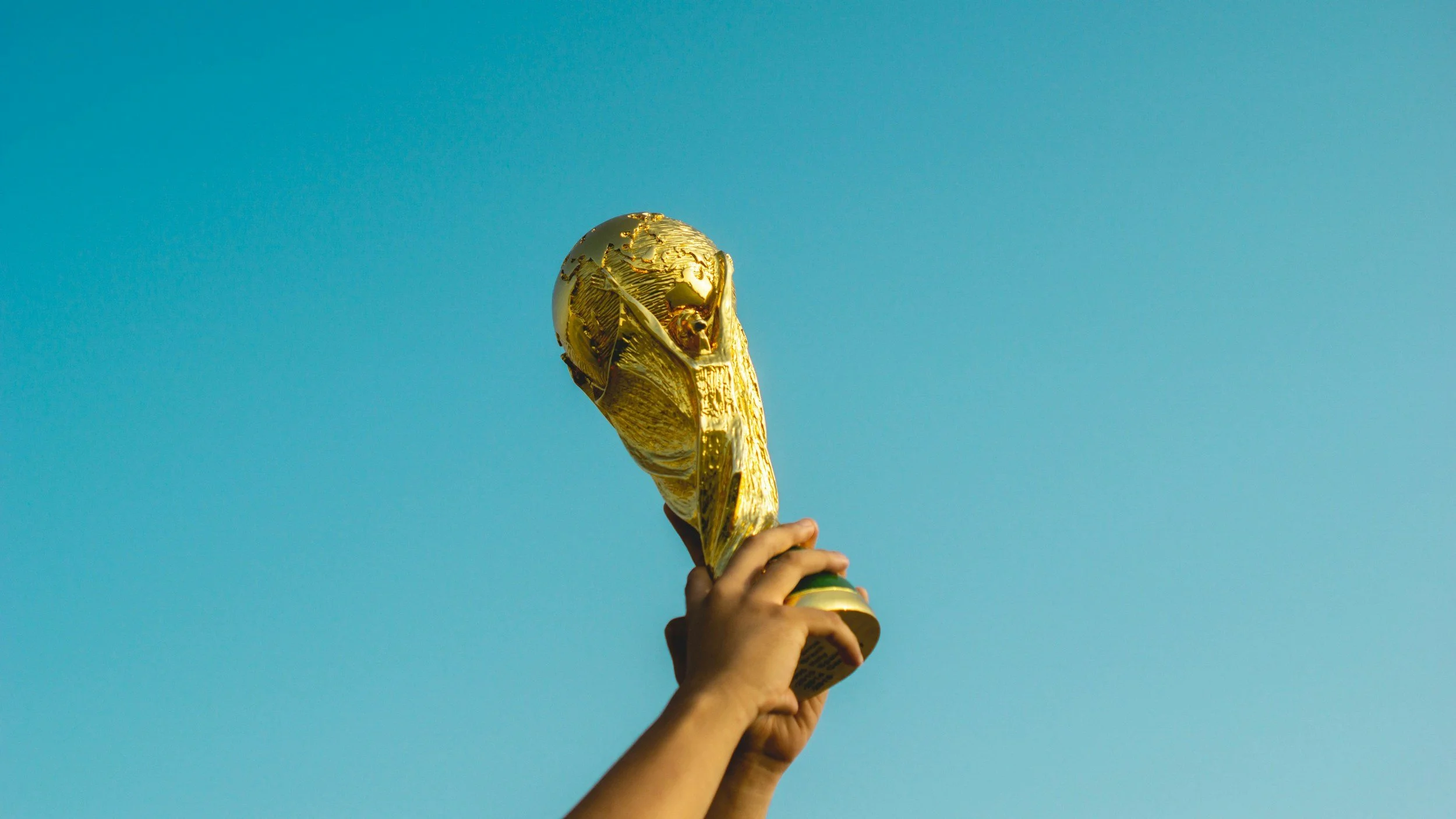
Sport has always been politics with a stadium attached. The 2026 FIFA World Cup is simply the most expensive proof of that in history.
On June 11, 48 teams play 104 matches across the United States, Canada and Mexico in what will be the largest men's World Cup ever staged. FIFA expects the tournament to generate close to $12 billion in revenue. Top tier sponsors include adidas, Coca Cola, Visa, Hyundai/Kia, Lenovo, Qatar Airways and Aramco. Broadcasters are paying record sums. More than six billion interactions are projected across the tournament.
This should be the cleanest commercial story in sport. The biggest event. The biggest audience. The biggest cheque.
Instead, it is one of the most complicated sporting moments any of us have operated through.
The contradiction at the centre of everything
America faces a question it may never directly address: how does a country celebrate flags in the stands while scrutinising the passports required to wave them?
The Trump administration has imposed travel bans on nationals from 39 countries, most of them in the Middle East and Africa. Fans from these nations are largely unable to attend games in the United States. Haiti, Iran, Senegal and Ivory Coast (all of which have qualified for the 2026 tournament) are included in those bans.
The players can travel. The fans cannot.
FIFA has confirmed it is not involved in host country immigration processes. The organisation pressed ahead regardless. And in doing so it handed the contradiction to every sponsor in the building.
Iran, war and the most awkward group stage in history
The biggest single story of this tournament is not about football.
The United States and Israel launched military strikes on Iran that killed over 1,000 people, including Supreme Leader Ali Khamenei. Tehran responded with waves of missiles and drones targeting Israel and US military bases across the region.
Iran's Minister for Sport confirmed the country would not participate in the World Cup, citing the assassination of their leader. The Iranian Football Federation then reversed course, confirming its intention to participate but requesting that its matches be relocated from the USA to Mexico.
FIFA President Gianni Infantino ruled out any schedule changes. "We have a schedule. We will soon have the 48 competing teams confirmed, and we want the World Cup to go ahead as scheduled," he said. Iran are slated to play two World Cup group games in Los Angeles and one in Seattle.
Trump himself said he cannot guarantee the safety of the Iranian national team, and that Iran is "a very badly defeated country."
This is the context in which global sponsors are activating. This is the tournament Coca-Cola is running fan festivals around. This is the backdrop against which Bank of America, Verizon and Visa have committed billions in marketing investment.
If you work in sports sponsorship, this is your operating environment right now.
What this costs sponsors who weren't ready for it
Sponsors must closely monitor trade developments, international relations and economic indicators, factoring potential cost increases, logistical hurdles and shifts in consumer sentiment into their planning and risk mitigation strategies. The potential impact on ROI is significant.
That is the polite version of what is happening.
The more direct version: the brands that spent two years building World Cup activation strategies around a global unity narrative are now sitting inside a tournament where the host nation is at war with a participating team, fans from four qualified nations cannot enter the host country, and the US President publicly told one of those teams he cannot keep them safe on American soil.
Critics argue that FIFA risks appearing aligned with US policy if it ignores boycott calls or discourages political expression by players and fans. That reputational risk transfers directly to sponsors.
The brands that win here are not the ones who pretend the geopolitics are not happening. They are the ones who had the commercial agility to plan for instability from the start.
The new competitive advantage is agility, not access. Winning brands will be those that plan for fragmentation as the default, build flexibility into their media strategies and treat viewing behaviour as something to anticipate rather than assume.
Security funding has stalled. The risk is real.
This is not just reputational exposure. There are operational consequences.
Intelligence briefings have warned of the potential for extremists and criminals to target the World Cup at a time when hundreds of millions of dollars of approved security funds have been delayed, causing US preparations to fall behind.
The briefings outlined the risk of extremist attacks, including attacks on transportation infrastructure and civil unrest related to Trump's immigration crackdown. Three other countries whose fans face Trump travel bans. Haiti, Ivory Coast and Senegal have also qualified for the tournament.
A Fan Festival event that had been planned in Liberty State Park in Jersey City for the duration of the tournament was cancelled unexpectedly and replaced with smaller gatherings.
Fan festivals are not peripheral. They are where sponsorship activations live for the majority of the audience who will never set foot inside a stadium. When a flagship fan zone disappears weeks before the tournament opens, that is a signal worth reading.
The soft power story is broken before the ball is kicked
Every major sports property sells soft power. The host nation uses the event to project competence, openness and cultural appeal. That is the deal. It has been the deal since 1930.
Used wisely, the commercial and cultural capital of hosting can be converted for political, economic, trade and security purposes.
The United States is not using it wisely.
For America, this summer, the World Cup is a branding exercise, a soft power stunt and a tourism swell. It is geopolitics through the artery of sport. The problem is that the geopolitics are contradicting the brand.
Daniel Norona of Amnesty International USA put it directly: "You cannot have unity if you're promoting discrimination, if you're promoting repression, and if you're pushing to silence anyone who disagrees with you."
The White House simultaneously describes the tournament as a "global moment of unity" and refuses exemptions for fans from banned nations. FIFA awarded Trump the inaugural FIFA Peace Prize. These things do not add up. Audiences around the world can see that they do not add up.
The FIFA neutrality myth
FIFA has a position on this. Its position is that it does not have a position.
“FIFA cannot resolve geopolitical conflicts, but we are committed to using the power of football and the FIFA World Cup to build bridges and promote peace," Infantino told a Council meeting in Zurich.
That sentence does a lot of work. But it does not do the one thing that matters.
The central question is whether FIFA can realistically maintain a politically neutral tournament when host states must simultaneously enforce sanctions law, criminal regulation and public security obligations.
The answer is no. It cannot. And the attempt to do so places every commercial partner in the gap between what FIFA says and what is actually happening on the ground.
This is not new. We watched it with Qatar. We watched it with Russia. The model FIFA uses is always the same: collect the revenue, deploy the neutrality rhetoric, hand the consequences to the sponsors and the broadcasters and the players.
What is different this time is the scale. FIFA's financial report projects total revenues exceeding $11 billion during the 2023 to 2026 commercial cycle, with broadcasting rights generating approximately $3.9 billion and marketing partnerships contributing an additional $2.7 billion. This is too much money for too many brands to walk away from. And FIFA knows it.
The World Cup is one event. The trends underneath it are reshaping the entire industry. See WHAT IS DRIVING SPORTS MARKETING IN 2026.
What it means if you work in sport
You do not need to be a FIFA sponsor for this to matter.
Every sports property watches how the biggest event in the game navigates a crisis. The playbook FIFA uses in 2026 becomes the operating precedent for the next contentious host. The next controversial sponsor. The next moment when politics and sport collide and someone in a boardroom has to decide how much neutrality their brand can afford.
The commercial lesson from 2026 is not that sport and politics cannot coexist. They always have. The lesson is that the organisations who plan for that tension, who build agility into their commercial structures and who do not outsource their values to the governing body, are the ones who come out intact.
Rights holders who have structured their sponsorship frameworks around geopolitical risk, who have crisis communications planned before the crisis, and who understand that their brand does not disappear when the politics get difficult. Those are the organisations whose partners stay loyal through the noise.
The ones who assumed the tournament would carry them are already managing calls they were not ready for.
In the end, the tournament will likely proceed much as planned. But the political environment surrounding it will be far more charged than FIFA originally anticipated.
For the brands inside it, the question was never whether the World Cup would happen.
It was whether they were ready for what happens around it.
