
Sport's Neutrality Problem: What the Next Generation of Commercial Deals Looks Like
Sport built its commercial model on a promise it never had to articulate.
The promise was this: geopolitics stays outside the stadium. Sovereign money comes in, broadcasts go out, hosting fees clear, and the world's tensions stay at the gate. It was never written into a contract. It did not need to be. For a long time, it was simply true.
That assumption collapsed in February 2026.
The assumption that built an industry
The past decade of sports growth was funded, in large part, by sovereign capital. Gulf states, sovereign wealth funds and state-backed investors discovered that sport was the most efficient vehicle for global image projection ever devised. Formula 1 expanded its calendar aggressively into the Middle East. Saudi Arabia spent more than $6 billion on sport between 2021 and 2026. FIFA moved the World Cup to a format that needed new hosts. The economics worked because the politics stayed quiet.
Rights holders made long-term decisions on that basis. Promoter fees generated $824 million for Formula 1 in 2025 alone. That was 27 percent of the sport's primary revenue. It arrived on contract, with built-in escalators. Stable. Predictable. The financial equivalent of a fixed-income instrument inside a growth business.
Commercial teams built projections around it. Sponsorship portfolios were structured around it. The whole model depended on the assumption holding.
It no longer holds.
Three signals in one month
In March 2026, three stories ran in parallel. Most of the industry read them as separate headlines. They are not.
The first: F1 officially confirmed the cancellation of the Bahrain and Saudi Arabian Grands Prix due to the ongoing situation in the Middle East, with neither event to be replaced on the 2026 schedule. A Guggenheim Partners analyst note reported the cancellations will cost the sport approximately $190 to $200 million in revenue and $80 million in EBITDA. Bahrain and Saudi Arabia account for roughly $115 million in combined hosting fees. That money is gone. Both nations retain long-term contracts. The revenue gap remains.
The second: Iran's football chief confirmed the national team intends to boycott matches on US soil but will not withdraw from the World Cup entirely, leaving the federation in negotiation with FIFA to move all three group games to Mexico. FIFA has shown no willingness to sanction any schedule changes, leaving Iran's participation riddled with uncertainty. For the tournament's sponsors, the situation is entirely without precedent. A qualified team from a country at war with one of the host nations, playing out their participation in public, while the governing body insists the schedule holds. There is no brand safety clause written for this.
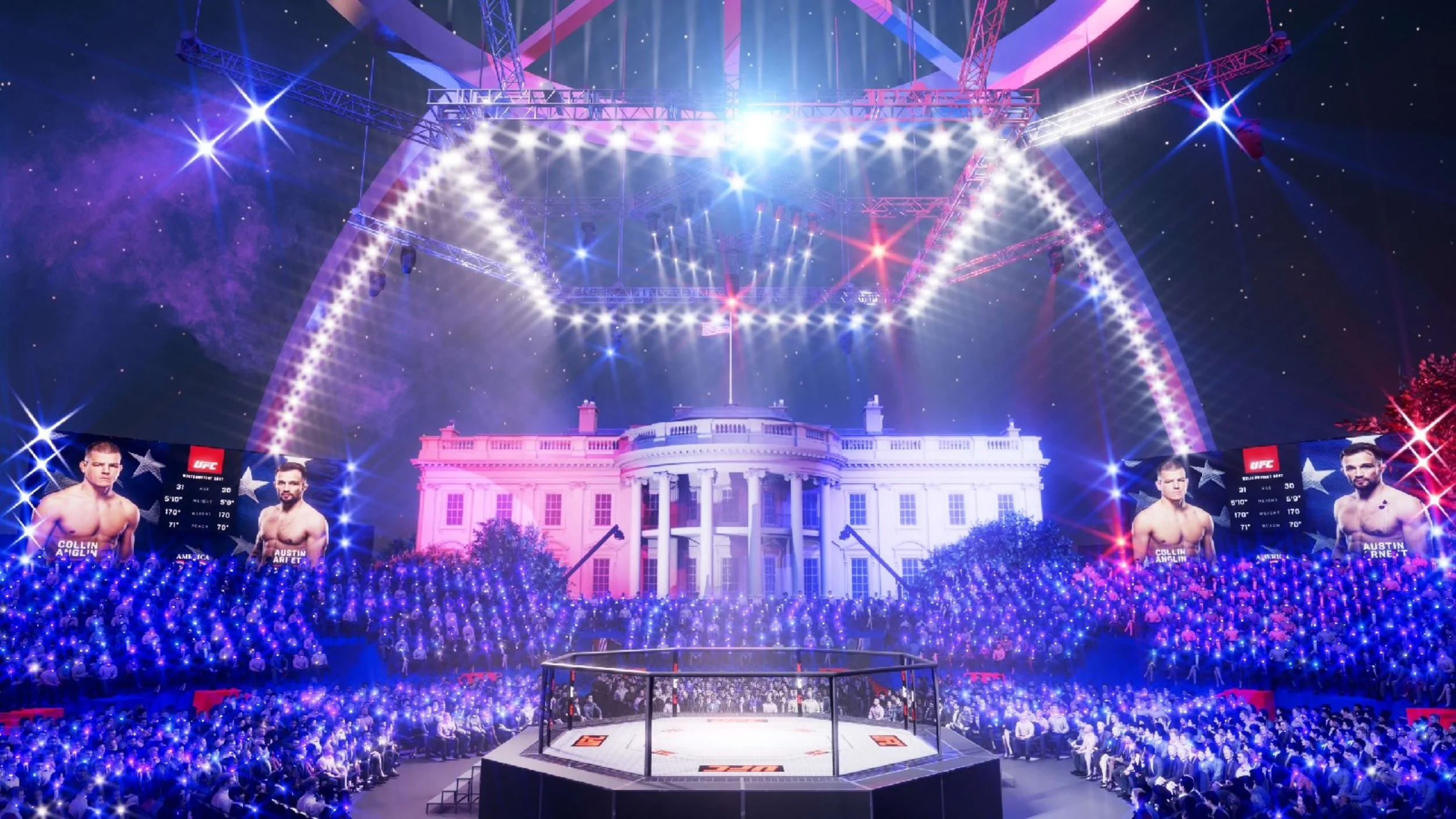
The third: UFC parent company TKO Group Holdings confirmed the White House event will cost at least $60 million to stage and will likely post financial losses of around half that figure. The event is not a commercial decision. It is a political one, dressed as a commercial one. Even Joe Rogan, who will commentate on the event, called it "crazy" to hold such a high-profile gathering at the White House in the middle of a war. When the voice of your broadcast talent is publicly questioning whether the event should exist, you have a different kind of problem than a difficult sponsor negotiation.
Three events. Three different sports. Three different commercial structures. One pattern.
What this means for sponsorship
The brand safety conversation in sport has been dominated for years by social media risk. Athlete conduct clauses, content review processes, cancel culture contingencies. Sophisticated in parts. Built entirely for the wrong threat.
Brand safety clauses were not designed for a situation where the host country is at war. They were not designed for a qualifying team whose government's relationship with the host nation is actively hostile. They were not designed for an event where the broadcast lead questions the wisdom of staging it at all.
The next generation of sponsorship deals will price this differently. That means geopolitical risk clauses modelled on what force majeure provisions now do for hosting contracts, but written for sponsors rather than promoters. It means event location due diligence becoming a standard part of the commercialisation process. It means tier-one brands asking, before they sign anything, which territories their logo appears in and under what conditions it can be withdrawn without triggering a penalty.
This is not a refinement of existing sports marketing strategy. It is a rebuild of the risk architecture underneath it. None of this existed at scale twelve months ago. It will within two years.
Neutrality is collapsing as a commercial assumption. It is one of several structural shifts covered in THE 2026 SPORTS MARKETING TRENDS REPORT.
What this means for rights holders
The immediate problem is revenue. F1's decision to cancel the two Gulf races means income from promoters will fall to around $971 million in 2026, versus $1.04 billion the previous year. That shortfall is partially absorbed elsewhere. But the model that produced it, a calendar built on sovereign-backed hosting fees from politically exposed territories, is now visibly fragile.
The deeper problem is planning.
This connects to something that was already true before February 2026. Many sports properties rich in sovereign capital were already struggling to convert that capital into commercial momentum. The hosting fee model created the appearance of commercial strength without building the underlying commercial infrastructure to sustain it. Geopolitical disruption has now exposed exactly that gap.
Commercial teams at rights holders are not built to recalculate revenue projections in real time when a hosting market becomes a conflict zone. There is no playbook for this because, until now, it was not a scenario that needed one.
The rights holders who move fastest will be the ones who treat this as a structural problem rather than an operational one. That means building geopolitical risk into commercial planning at the earliest stage, not discovering it when a race is cancelled six weeks out. It means diversifying the hosting fee dependency that made Gulf expansion so profitable and so precarious simultaneously. It means having a commercial team capable of scenario planning against political outcomes, not just financial ones.
Understanding how boards measure whether commercial strategy is working becomes even more urgent when the revenue assumptions underneath the strategy have shifted without warning.
What comes next
Sport will adapt. It always does. The 2011 Bahrain cancellation passed without systemic change because the moment was contained. This moment is not contained.
The geopolitical environment that made sovereign-funded sports growth possible has changed. The structures that supported it have not caught up. The gap between those two realities is where the commercial risk now lives, and also where the commercial opportunity sits for anyone who understands it clearly.
The operators who build commercial models that convert attention into revenue under conditions of political uncertainty will be structurally ahead. The ones who treat this as a temporary disruption will find themselves renegotiating contracts they signed in a different world.
Sport's neutrality was always a convenience. The commercial deals that depended on it need rebuilding from the ground up.
